


 Cart
Cart
 sales@molnova.com



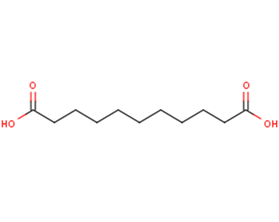
Undecanedioic acid
CAS No. 1852-04-6
Undecanedioic acid( —— )
Catalog No. M20255 CAS No. 1852-04-6
Undecanedioic acid has been found in parts of human aortas with advanced atherosclerotic lesions associated with intercellular matrix macromolecules and specifically with elastin.
Purity : >98% (HPLC)
 COA
Datasheet
HNMR
HPLC
MSDS
Handing Instructions
COA
Datasheet
HNMR
HPLC
MSDS
Handing Instructions
| Size | Price / USD | Stock | Quantity |
| 100MG | 38 | In Stock |


|
| 200MG | Get Quote | In Stock |
|
| 500MG | Get Quote | In Stock |
|
| 1G | Get Quote | In Stock |
|
Biological Information
-
Product NameUndecanedioic acid
-
NoteResearch use only, not for human use.
-
Brief DescriptionUndecanedioic acid has been found in parts of human aortas with advanced atherosclerotic lesions associated with intercellular matrix macromolecules and specifically with elastin.
-
DescriptionUndecanedioic acid has been found in parts of human aortas with advanced atherosclerotic lesions associated with intercellular matrix macromolecules and specifically with elastin.
-
In Vitro——
-
In Vivo——
-
Synonyms——
-
PathwayOthers
-
TargetOther Targets
-
RecptorOthers
-
Research Area——
-
Indication——
Chemical Information
-
CAS Number1852-04-6
-
Formula Weight216.27
-
Molecular FormulaC11H20O4
-
Purity>98% (HPLC)
-
SolubilityMethanol: 10 mg/mL (46.24 mM)
-
SMILESOC(=O)CCCCCCCCCC(O)=O
-
Chemical Name——
Shipping & Storage Information
-
Storage(-20℃)
-
ShippingWith Ice Pack
-
Stability≥ 2 years
Reference
1.Claire M et al. Characterization of lipids associated with macromolecules of the intercellular matrix of human aorta. Connect Tissue Res. 1976;4(2):61-71.
molnova catalog



related products
-
Jalapinolic acid
Jalapinolic acid is a hydroxypalmitic acid.
-
Oxytetracycline Dihy...
Oxytetracycline Dihydrate is a prescription antibiotic, interfering with the ability of bacteria to produce essential proteins.
-
Aminacrine
9-Aminoacridine is a highly fluorescent dye used clinically as a topical antiseptic and experimentally as a mutagen, an intracellular pH indicator.
